Friday, May 14, 2010
Ideas need words
This is the publicity slogan for the Auckland Writers and Readers Festival and it is emblazoned in capital letters 3 inches high on the volunteers' t-shirts. As I was heading for the bus stop tonight after a day of ideas and words someone pointed at me and said "that's not true you know". Well, I hadn't actually thought about it until that moment but I do think that people need books and books contain ideas and words describe those ideas and so I am quite happy with the phrase. It's not exclusive; ideas need images too and art is included in the Festival. Perhaps I will stop to chat with the next person who contradicts my t-shirt.
Today I heard Elizabeth Smither reading some of her poetry and talking about Lola, a novel that I have already read but I enjoyed hearing about its genesis and background.
An excellent session followed, chaired by Kim Hill with Anne Salmond and Thomas Keneally discussing their various historical books. Much of the discussion concerned the "cultural faultline" - that space between the new settlers and the native populations in Australia and New Zealand. Thomas Keneally hopes that his writing affirms the humanity of our ancestors on either side of the race divide whilst Anne Salmond sees herself dancing on the line cherishing things from both sides. She is always curious to find out what happened in the past to create a richer story and expects a blur between fiction and non-fiction if imagination is brought into the explanation of an event. Thomas Keneally then stated that "fiction is trying to tell the truth by telling lies whilst history is trying to tell the truth by trying to tell the truth". Thomas Keneally was amusing, Anne Salmond was expansive and Kim Hill was well-prepared, perceptive and probing with her questions. Her radio interview with Thomas Keneally will be worth listening to - find it here if you missed the broadcast.
Labels:
Authors
Festival off to a flying start
The 2 day schools programme at the AWRF was a great success - packed audiences for both local and international writers with lots of questions and chatter and vows to read all the books. Anna McKenzie and David Levithan were the big hits. Anna Mackenzie's The sea-wreck stranger is a well thought out story set in a possible New Zealand landscape.
The Opening night event in the ASB theatre was also packed, the audience listening eagerly to the readings of five very different writers. Commentating on the Festival is a team from Christchurch Libraries who are producing several blog posts a day with audio interviews as well. Check out the Christchurch blog here. Richard Liddicott described last night session in these terms:
Thomas Keneally had some masterful turns of phrase; Emily Perkins read an unpublished piece full of sensory detail; Colm Toibin read as if he was delicately tip-toeing a merry dance, even breaking into song; Lionel Shriver displayed her ‘beguiling barbarity’ – dropping some swear-bombs that had the audience squeezing their knees together, but also some stunning phrases such as ‘kisses that were like sucking a coin’; William Dalrymple capped it all off with his fascinating descriptions of ‘religious lunatics’. Minstrels who make Glastonbury look like a Rotary dinner, an orthodox priest on the West Bank, and a cricket-loving Indian customs official who loved ‘Bottom’ – Ian Botham.
I agree that it is a treat hearing from the authors direct. Richard's final comment was that in print they impress you – in person they astound.
I'm back at the festival today to be astounded!
The Opening night event in the ASB theatre was also packed, the audience listening eagerly to the readings of five very different writers. Commentating on the Festival is a team from Christchurch Libraries who are producing several blog posts a day with audio interviews as well. Check out the Christchurch blog here. Richard Liddicott described last night session in these terms:
Thomas Keneally had some masterful turns of phrase; Emily Perkins read an unpublished piece full of sensory detail; Colm Toibin read as if he was delicately tip-toeing a merry dance, even breaking into song; Lionel Shriver displayed her ‘beguiling barbarity’ – dropping some swear-bombs that had the audience squeezing their knees together, but also some stunning phrases such as ‘kisses that were like sucking a coin’; William Dalrymple capped it all off with his fascinating descriptions of ‘religious lunatics’. Minstrels who make Glastonbury look like a Rotary dinner, an orthodox priest on the West Bank, and a cricket-loving Indian customs official who loved ‘Bottom’ – Ian Botham.
I agree that it is a treat hearing from the authors direct. Richard's final comment was that in print they impress you – in person they astound.
I'm back at the festival today to be astounded!
Monday, May 10, 2010
Auckland Writers and Readers Festival
starts this week!
I love attending book festivals to listen to authors and meet other readers. There is always a buzz at such events with people talking non-stop about books.
The Auckland Readers and Writers Festival is held annually in May and begins this year on Wednesday 12 May with public events held at the Aotea Centre from Friday 14 to Sunday 16 May. See the printed programme available in Libraries and bookshops or visit http://www.writersfestival.co.nz .
Actually just to feel the atmosphere you can pop into the Aotea Centre over the weekend and visit the bookstall – you are bound to see some of New Zealand’s top literary figures and there will be international authors signing copies of their books as well. Inspiring!
I love attending book festivals to listen to authors and meet other readers. There is always a buzz at such events with people talking non-stop about books.
The Auckland Readers and Writers Festival is held annually in May and begins this year on Wednesday 12 May with public events held at the Aotea Centre from Friday 14 to Sunday 16 May. See the printed programme available in Libraries and bookshops or visit http://www.writersfestival.co.nz .
Actually just to feel the atmosphere you can pop into the Aotea Centre over the weekend and visit the bookstall – you are bound to see some of New Zealand’s top literary figures and there will be international authors signing copies of their books as well. Inspiring!
Wednesday, May 5, 2010
Books not bombs
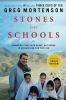
Following on from the huge success of Three cups of tea, ex-mountaineer Greg Mortenson has written Stones into schools; promoting peace with books, not bombs in Afghanisatan and Pakistan in which he charts the progress of his charitable organisation to establish schools, especially schools for girls, in remote regions of Pakistan and Afghanistan. His philosophy is that "if you educate a girl, you educate a community". The work of his 'dirty dozen' to reach such inaccessible areas and the speed with which schools have been constructed is amazing in areas that are war-torn and earthquake damaged.The importance of education to national reconstruction and development is Mortenson's driving factor but both books are written with compassion and humility about the people involved, about cultural relationships that are built on respect and trust, about girls' individual successes and both offer hope for the future.
Labels:
books
Monday, April 26, 2010
What is it about Canadian writers?
Margaret Atwood, Carol Shields and Alice Munro are at the top of literary lists and I recommend Cat's eye, The stone diaries and Runaway as "must reads". But there are other contemporary Canadian writers who deserve to be read more widely.
I have just read February by Lisa Moore and was impressed by its uncovering of feelings through her analysis of family situations and an appalling tragedy. The narrative spirals round and round a preoccupation but is resolved in an understated way leaving the reader to fit the pieces together. Very satisfying.
And immediately afterwards I read Good to a fault by Marina Endicott which won the Commonwealth Writers Prize in 2009. Considered a social observer in the tradition of Jane Austen - Barbara Pym - Anne Tyler (yes, all on my list of highly recommended writers), Marina Endicott has drawn an unlikely picture of cohabitation and peopled it with memorable characters. She comments with wit and wisdom on illness, death, religion and goodness and provides another credible and satisfying ending.
Labels:
books
Friday, April 16, 2010
What makes a New Zealand novel?
The classic New Zealand novel by Jane Mander, The story of a New Zealand river explores feelings of isolation, remoteness and loneliness but there is a way for Alice to come to terms with her surroundings.
A modern New Zealand novel by poet Elizabeth Smither considers feelings in terms of family rather than landscape but it also includes a growing awareness of self that makes for interesting reading.
This contemporary novel, just like modern life, is wider than New Zealand including sections set in Australia and trips overseas.
Lola is a gentle read, written poetically with wry humour and I enjoyed it very much.
A modern New Zealand novel by poet Elizabeth Smither considers feelings in terms of family rather than landscape but it also includes a growing awareness of self that makes for interesting reading.
This contemporary novel, just like modern life, is wider than New Zealand including sections set in Australia and trips overseas.
Lola is a gentle read, written poetically with wry humour and I enjoyed it very much.
Labels:
books
Monday, April 12, 2010
First person narratives

First person narratives in fiction are always interesting, sometimes not reliable and increasingly speaking from elsewhere! I'm thinking about the books narrated after a character's death; The Lovely bones, If I stay and Her fearful symmetry in particular.What links these books is that the narrator is trying to make sense of the current situation by considering the past and the possible future. In essence, these books explore relationships between the narrator and the other characters but because of the narrator's unique position they have more knowledge than any of the other characters. That adds an extra element of analysis and consideration that I have enjoyed in these three novels.
And I have just noticed that the covers are a similar shade of blue - now I wonder if that is significant too?
Labels:
books
Subscribe to:
Posts (Atom)