Saturday, July 24, 2010

Poetry

National Poetry Day, this year on Friday 30 July, aims to involve as many people as possible in celebrating poetry, poets and poems. There are events all over the country and also newspaper and radio items and interviews. The New Zealand Post Poetry Award for 2010 will be announced in August.


Newly published, and not eligible for this year's poetry award, is a lovely little book by Fiona Kidman called Where your left hand rests. Within the attractive cover and endpapers are beautiful illustrations and fascinating poems that encapsulate a deep sense of family and history. Various images of Victorian embroidery separate the sections of the book but the repetition of a perfect rose provides continuity. This is a special book to hold, look through and read - a little treasure.

Saturday, July 17, 2010

Private life

The latest novel by Jane Smiley, Private life, describes the lifetime of one woman, a very private life indeed but it occurs over 70 years of public and significant events in American history including the 1905 San Francisco earthquake, the Great War, the Spanish flu epidemic and the Japanese attack on Pearl Harbour. What unfolds against this panarama of history is Margaret's internal struggle to understand herself and her relationships with those around her. In conversation with Kim Hill, Jane Smiley admitted that she set out to write an interesting story and used an eccentric character from her own family as a basis for Captain Andrew Jefferson Early. Posing the question "how does a normal person keep up with abnormality around them" Jane Smiley suggested the book could be seen as a parable for modern American society. I think what she has brilliantly achieved is a distillation of the many threads, forces and coincidences that shaped the life of Margaret and her sad marriage, into a symbolic study of selflessness.

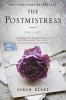
Jane Smiley's book contains several other effective character studies; a Japanese midwife, an elusive male friend and the very independent Dora, a journalist who becomes a European war correspondent in 1916. Another novel worth reading with a female war correspondent, this time during the Second World War, is the Postmistress by Sarah Blake; also a study in the personal versus the political and how people cope in difficult situations.

Friday, July 9, 2010

a book or a Kobo?

Not the right question? It's the content that matters. Ask instead - a novel or a biography, historical or contemporary, funny or serious, light or challenging?
What we read is more important than how and I am increasingly concerned about the articles and letters stating that the feel of a book, the smell of the pages is an integral part of the experience. For me it's the story every time.
Now I can choose to read a printed book or to download to my Kobo and I'm doing both quite happily. The pleasure of hunting out a good read and then getting hold of it and then just reading and reading - thank goodness it's the weekend!


The June issue of Good Reading Magazine, available by the way in print or online, included an article on music in novels. One title listed that I haven't read is now on my Kobo, immediate transfer, no waiting in a reserves queue or travelling to the bookshop and I can fit it easily into my bicycle basket.

Thursday, July 1, 2010

Shortlisted - but how to choose the winner?

Two novels and a book of short stories are the finalists for the fiction category of the New Zealand Post Book Awards 2010.
I want both the novels, As the earth turns silver by Alison Wong and Limestone by Fiona Farrell, to win and almost wish they had been listed in separate years.
I enjoyed both of them as they are highly readable quality fiction and well deserve being on this shortlist.
Contrasting these two novels reveals: a first time author and a very well established author; a story firmly set in New Zealand and a story that roams the world; a story that includes historical reality and a story that is wonderfully imaginative; a novel of short, sharp chapters and a novel of long complex chapters; an exploration of the past and an analysis of the present. Comparing the two books we find expressive writing and wonderful metaphors, character development and poignant personal moments, a feeling of how the past explains the future and the satisfaction of reading a well structured book and learning from it.


Since I chose As the earth turns silver for my banner above I think I must back this one as the winner - the announcement will be on Friday 27 August. I can even vote for it in the People's choice award.

Here is another recommendation for you


2010 NZ POST BOOK AWARDS FINALISTS:
Fiction: As the Earth Turns Silver by Alison Wong, Limestone by Fiona Farrell, Living as a Moon by Owen Marshall.

Poetry: Just This by Brian Turner, The Lustre Jug by Bernadette Hall, The Tram Conductor's Blue Cap by Michael Harlow.

General Non-Fiction: Aphrodite's Island by Anne Salmond, Beyond the Battlefield: New Zealand and its Allies, 1939-1945 by Gerald Hensley, Cone Ten Down: Studio pottery in New Zealand, 1945-1980 by Moyra Elliott and Damian Skinner, Encircled Lands: Te Urewera, 1820-1921 by Judith Binney, The Invention of New Zealand Art & National Identity, 1930-1970 by Francis Pound.

Illustrated Non-Fiction: Art at Te Papa edited by William McAloon, Go Fish: Recipes and stories from the New Zealand Coast by Al Brown, Maori Architecture: From fale to wharenui and beyond by Deidre Brown, Marti Friedlander by Leonard Bell, Mrkusich: The Art of Transformation by Alan Wright and Edward Hanfling.

All are available through North Shore Libraries.

Thursday, June 24, 2010

Orange books

The 2010 winner of the Orange prize for fiction is Barbara Kingsolver with The Lacuna. Daisy Goodwin, Chair of this year's judges, said "we chose The Lacuna because it is a book of breathtaking scale and shattering moments of poignancy". The scale is from Trotsky to McCarthy and the poignancy comes from the narrator's dealings with other people: his mother Salome, his mentor Frida Karlo, his assistant Violet Brown, as his past is explored and the present unfolds alarmingly. The book is about many things: art, politics, history, news and gossip, and the reader must work hard to fit all the pieces together. Kingsolver is exploring how we get to be who we are. In this case there is a gap, a lacuna, that is understood if you read optimistically to the very end.

The winner of the 2010 Orange award for new writers is Irene Sabatini for The boy next door. Set in Zimbabwe, this can be described as a love story with political scenery. From the first page I have found the writing is fresh and engaging and I am looking forward to reading the rest of this book.
The award for new writers always finds emerging talent and brings them to wider attention.


Last year's winner of the Orange award for new writers was Francesca Kay. I found the biographical style and the domestic descriptions in her novel An Equal stillness very real and evocative. She highlights the feelings of a talented artist struggling to mmet the demands of family responsibility. Her relationship with her husband and also with her art is all about balance. As Jennet finds her way, her husband is losing his and the reader learns more about that essential selfishness that drives the creative artist.

There is a wonderful blog devoted to the reading of Orange prizewinning writers that has some very interesting postings from readers all over the world; there are full reviews and comments and other news. It is well worth a look.

Sunday, June 13, 2010

Funny books

Not exactly laugh out loud titles but three amusing books that I have read recently:

Major Pettigrew's last stand by Helen Simonson has received rave reviews from all quarters - it is an English village novel with an unusual cast. There are the expected stock characters; the Lord of the Manor, the retired general, the Captain of the golf club and then the more contemporary characters; the Pakistani shopkeeper and the single mother. All are entertainly drawn. The action is somewhat predictable but the humour lies in the asides about class division, modern educational standards, global finance and family dynamics.


Sex and Stravinsky by Barbara Trapido has a very attractive cover and enjoyably twisted content; mismatched couples ultimately get rearranged. Set in England and South Africa this novel is another case of family dynamics producing farcical situations. The book is well structured and the characters are sharply developed. Trapido is a clever and competent writer and creates just the right amount of amusement and implied judgment.


Laura Rider's masterpiece by Jane Hamilton also veers towards farce but handled by such a good writer this becomes satire at its best. In line of attack are radio presenters, creative writing teachers, lawyers and academics but it's a romance writer who wins the day. Another twisted plot with manipulated characters and lots of contemporary preoccupations; gardening, gourmet cooking, email, UFOs but all knitting together very well  - very droll.


For some light reading that will make you smile, try one of these.

Saturday, June 5, 2010

Reading by moonlight

Lovely title, especially for the first ebook that I have read on my Kobo, but not a lovely subject. Reading by moonlight by Brenda Walker, subtitled how books saved a life, describes in five sections; surgery, radiation, chemotherapy, reconstruction and survival, the author's thoughts, feelings and fears about breast cancer and, alongside those, her reactions to and her understandings of the books that were important reading for her at the time.
This book is full of metaphor and quotable insights and I found it a mesmerising, lyrical read. Walker is a teacher and writer in Western Australia and has succeeded in explaining cancer diagnosis, treatment and rehabilitation in a hopeful, inspiring way.
 She commented that she "likes to read books that show us ways other people deal with problems" and Reading by moonlight is itself a perfect example.


I have read several novels that explore women's reactions to cancer; interestingly two that I would recommend are also by Australian writers and the third is by Stella Duffy who spent her childhood in New Zealand.

In The Spare room Helen Garner writes about the joys and limits of female friendship under the pressure of terminal illness. This book is both angry and funny and shows the resourcefulness of the characters when faced with medical and social difficulties. Books and writing play a part here too and Helen Garner chooses her words carefully to add atmosphere.

Debra Adelaide's novel The Household guide to dying is also funny whilst dealing with the sadness of a younger woman and her terminal cancer. There are links to books here too as Delia, the narrator and cancer sufferer, is the author of a series of Household guides usually containing more than the expected domestic content. That is also the case with The Household guide to dying since she can write chapters on Wills and wishes and Funeral festivities, including paint your own coffin, but she cannot write the chapter on the afterlife as she has not reached there yet!
There is much domestic detail and family consideration that is empathic for the reader. Indeed there is much empathy and sympathy in this novel. I wept.


Cindy, the narrator in the State of happiness by Stella Duffey, is not a writer but a map-maker but there are also revealing metaphors here as she deals with a progressive disease. The writing is cool, almost clinical and not emotional but it still has an impact that stayed with me after I finsished reading. One reviewer wrote "It's perfectly possible (once you've recovered from the reading) to use this remarkable book as a resource and have some coping strategies in the knowledge store because Stella Duffy made me think quite clearly and lucidly around what would I do, what would I feel, how would I deal with it, would I be like Cindy?"

And I think that's what Brenda Walker meant about learning from books.